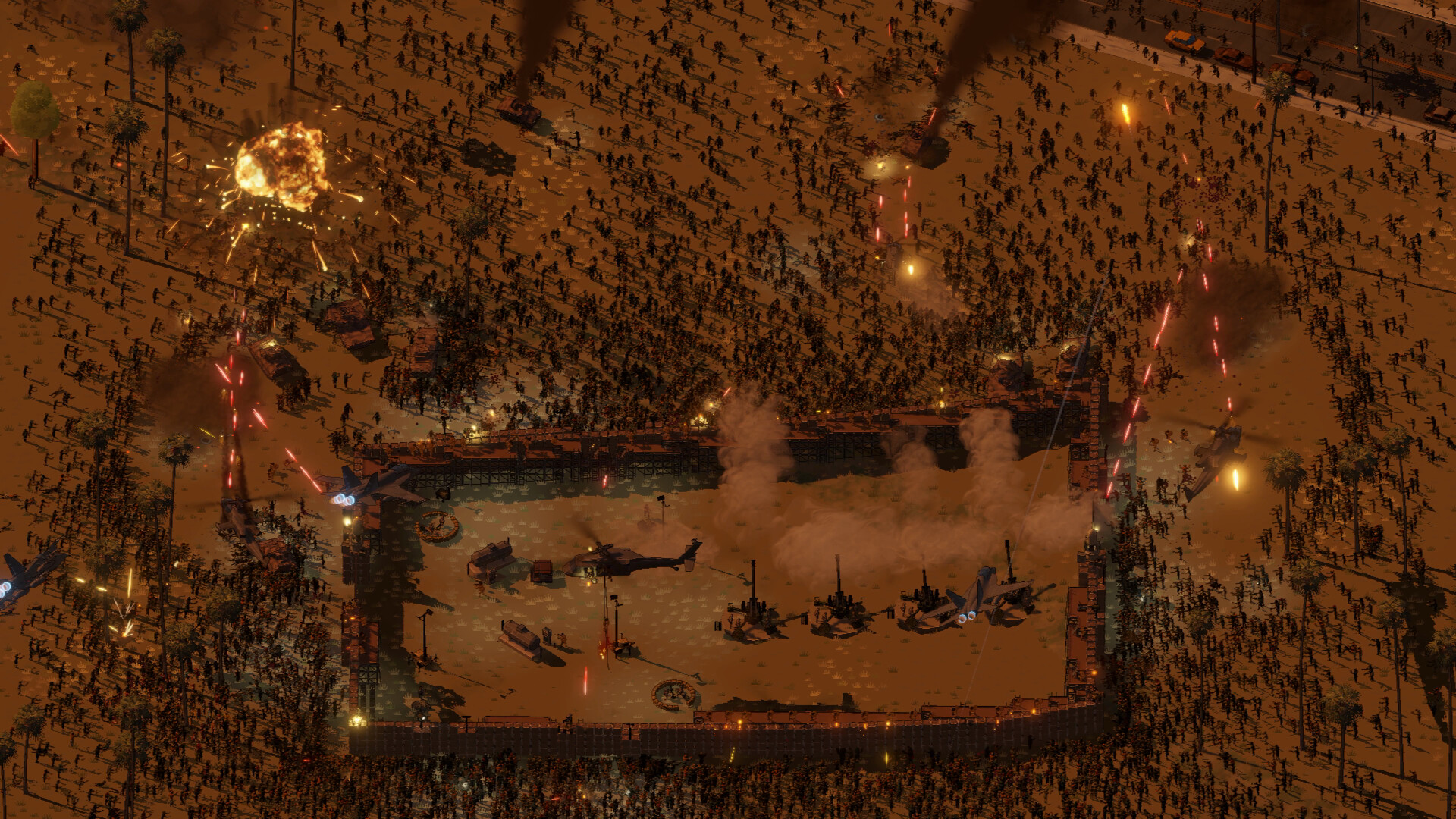
Strategic planning and real-time aerial positioning sit at the absolute core of modern survival strategy games, making the ebbtide helicopter mechanic an essential tool for players. Managing an ebbtide helicopter fleet effectively allows commanders to bypass ground obstacles, outmaneuver massive zombie hordes, and deploy squads precisely where they are needed most across hostile cityscapes.
The Evolution of Aerial Operations in Modern RTS
Real-time strategy games that blend survival mechanics with modern military hardware require deep logistical depth. The developers behind the upcoming survival RTS project have focused heavily on scaling up aerial capabilities to give players genuine tactical choices on the battlefield.
Instead of treating flying units as simple point-and-click entities, recent development updates highlight advanced control systems. Coordinating large-scale transport operations above metropolitan areas like Los Angeles requires careful management of spacing, flight vectors, and drop zones.
| Feature Aspect | Basic RTS Flight Mechanics | Advanced Ebbtide Implementation |
|---|---|---|
| Formation Control | Single-file lines or loose clusters | Multiple customizable formations (Wedge, Line, Column) |
| Spacing Control | Fixed, rigid distance | Adjustable inter-aircraft spacing |
| Deployment | Instantaneous teleportation | Real-time squad extraction and ground deployment |
| Environment Interaction | Flying over terrain obstacles | Flight deck takeoffs, urban obstacle navigation |
Community reports and early development showcases emphasize how crucial these formation controls are. Being able to adjust the distance between aircraft prevents mid-air bottlenecks and ensures your combat or transport groups arrive in an orderly, combat-ready fashion.
Tactical Advantages of Helicopter Formations
When managing a fleet of aircraft, formation choice can dictate the success or failure of an operation. Whether you are flying nimble scout craft or heavy-lift transport vehicles, understanding how to utilize spatial arrangements is critical.
| Formation Type | Best Suited For | Primary Tactical Advantage |
|---|---|---|
| Wedge Formation | Patrols and Combat Sweeps | Maximizes forward-facing defensive and offensive arcs |
| Line Abreast | Area Reconnaissance | Covers wide swathes of terrain simultaneously |
| Column Formation | Rapid Transit / Convoy | Efficient movement through narrow urban corridors |
| Spread Cluster | Evasion and Dispersal | Reduces splash damage vulnerability against anti-air threats |
Player experience from similar titles like Cepheus Protocol suggests that disciplined aerial groups suffer far fewer casualties than unorganized units. Developers are actively refining these movement behaviors, with community feedback even proposing subtle, randomized flight path jitter to enhance visual realism during long transits over the city.
Unit Spotlight: From Scout Choppers to Heavy Air-Mobility
A robust air wing requires a diverse roster of aircraft to handle reconnaissance, direct fire support, and troop transport. While heavy ground assets like the M2 Abrams tank hold the line against massive zombie hordes, air units provide the necessary flexibility to respond to dynamic threats.
| Unit Classification | Primary Role | Estimated Operational Utility |
|---|---|---|
| Light Scout (e.g., AH-6M Little Bird) | Fast Recon & Deck Operations | Ideal for tight flight-deck takeoffs and rapid scouting. |
| Medium Transport | Squad Insertion & Evacuation | Moves infantry squads safely across hazardous zones. |
| Heavy Gunfire Support | Suppression & Zone Clearing | Lays down heavy ordnance to clear landing zones. |
Taking off from specialized flight decks requires precise timing and spatial awareness. As showcased in recent community media, utilizing light platforms like the Little Bird allows for rapid deployment from forward operating bases directly into hot zones.
Logistics, Bases, and Surviving the Horde
Operating a successful air fleet is tied directly to your broader base-building strategy. In games focused on holding urban centers like Los Angeles against unending waves of the undead, resources are always tight.
Key Logistics Checklist for Air Operations
- Fuel and Maintenance: Ensure your forward operating bases (FOBs) have secure supply lines to keep aircraft refueled and repaired.
- Landing Zone Security: Always clear potential drop zones with artillery or heavy armor before sending in transport units.
- Pathfinding Management: Avoid routing high-value transport formations directly over heavy concentration zones without fighter escort.
Combining artillery strikes, armored tank columns, and airborne troop insertions creates a multi-layered defense strategy. For more details on upcoming features and release updates, you can check out the official Project Alive Steam Page as development progresses.
Frequently Asked Questions
What is the primary role of an ebbtide helicopter in the game?
An ebbtide helicopter primarily serves tactical transport, squad deployment, and aerial reconnaissance functions, allowing players to move infantry swiftly across dangerous urban environments.
Can I adjust the formation and spacing of my aircraft?
Yes, recent developer updates confirm that players can control helicopter group movement by selecting different formations and adjusting the spacing between individual aircraft.
How do air units interact with ground combat?
Air units work in tandem with ground forces—such as M2 Abrams tanks and artillery—by delivering reinforcement squads directly to contested zones and providing crucial operational mobility.
Where can I follow development updates for the game?
You can follow the developers on social media platforms like X under the handle @ProjectAliveDev for regular footage showcasing new mechanics, units, and features.