Welcome to the definitive ebbtide strategy guide for players diving into this ambitious real-time strategy and survival experience. Whether you are holding down the sprawling urban sprawl of Los Angeles or coordinating heavy armor against massive undead waves, having a solid ebbtide strategy guide is essential for keeping your survivors alive. Because the title blends traditional base-building mechanics with intense squad-based combat, mastering both micro-management and macro-tactics will determine whether your faction thrives or falls to the horde.
Core Game Mechanics and Overview
Understanding the fundamental pillars of the game is the first step in any reliable ebbtide strategy guide. Unlike standard real-time strategy titles where resource gathering is your sole focus, this game forces you to balance civilian safety, structural integrity, and frontline military engagement simultaneously.
Community reports indicate that early-game pacing can be overwhelming if you expand your borders too quickly. Players must carefully weigh the benefits of aggressive scouting against the risk of exposing unfortified flanks to roaming zombie hordes.
| Game Pillar | Primary Objective | Key Risk Factor |
|---|---|---|
| Base Building | Establish secure forward operating bases | Vulnerable perimeter walls |
| Squad Combat | Clear streets and rescue civilians | High infantry casualties |
| Heavy Armor | Deploy tanks and mechanized units | Fuel and ammunition scarcity |
| Air Support | Coordinate helicopter reconnaissance and strikes | Limited operational windows |
Base Building and Defensive Planning
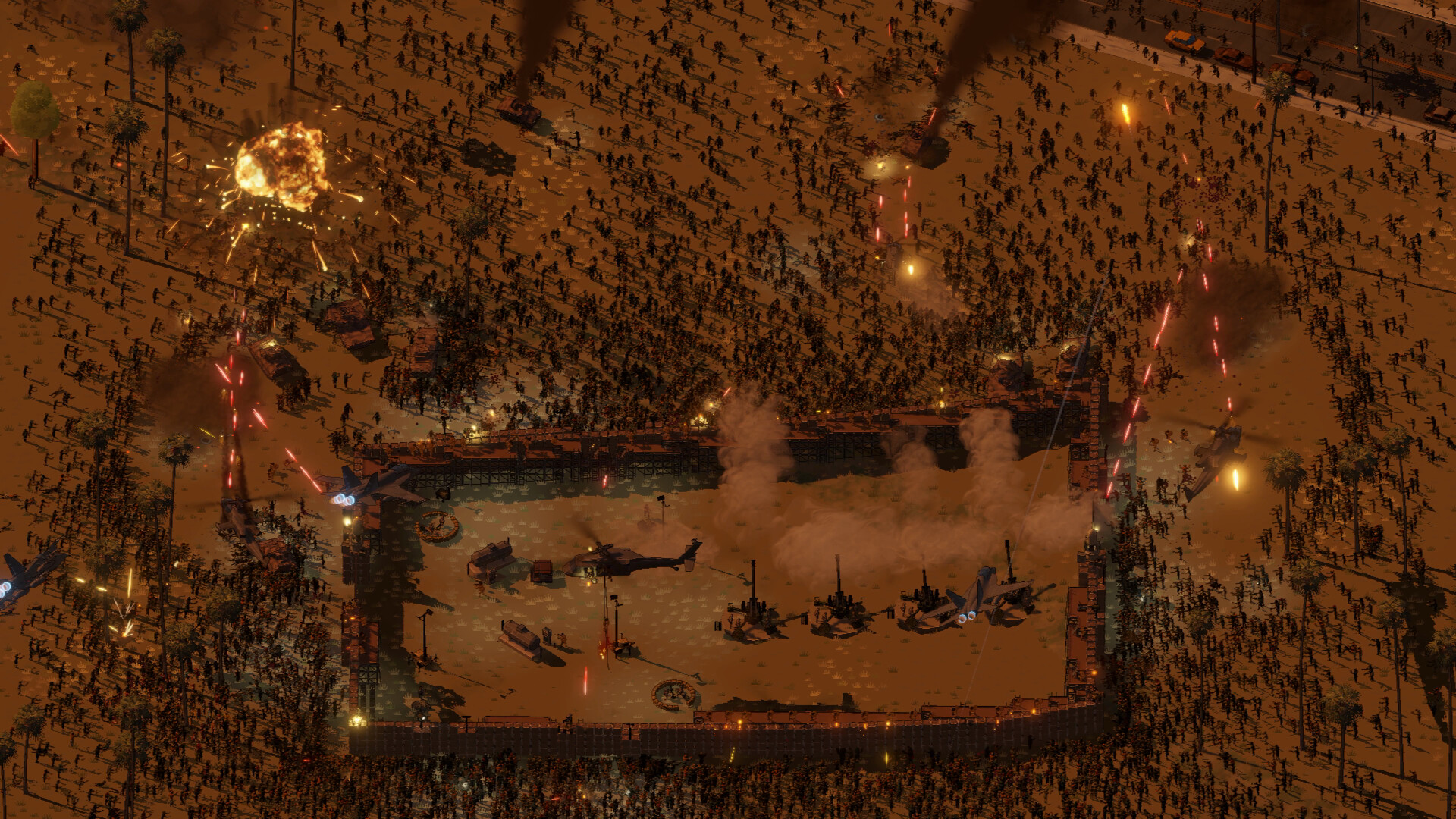
Your headquarters and forward operating bases are your lifeblood. Constructing choke points, utilizing natural terrain like rooftops, and setting up layered perimeters are core tenets of a successful defensive layout. According to community feedback, failing to invest in adequate perimeter defenses early on will result in your base getting overrun by day three or four.
When designing your layout, ensure that heavy vehicles have clear pathways to exit the base while pedestrian entry points remain tightly controlled.
| Structure Type | Recommended Placement | Strategic Purpose |
|---|---|---|
| Perimeter Walls | Outer borders of Los Angeles zones | Slow down incoming hordes |
| Rooftop Defenses | Elevated city positions | Provide high-ground firing angles |
| Supply Depots | Central, protected base zones | Fast resource distribution |
| Artillery Posts | Rear-line zones | Deliver long-range explosive support |
Deploying Military Assets and Heavy Armor
When the undead pressure mounts, infantry alone will not suffice. Bringing out mechanized units changes the dynamic of the battlefield entirely. As highlighted in early development showcases, utilizing heavy hardware like M2 Abrams tanks allows commanders to punch through massive undead crowds that would otherwise swamp standard infantry squads.
Players should pair armored vehicles with infantry support to prevent agile infected variants from swarming blind spots. Helicopters also play an invaluable scouting role, spotting incoming horde routes before they reach your primary gates.
| Unit Category | Best Used For | Tactical Counter / Weakness |
|---|---|---|
| Infantry Squads | Urban clearing and rescue ops | Vulnerable in open terrain |
| M2 Abrams Tanks | Crushing massive zombie density | Slow turning speed in tight streets |
| Helicopters | Scouting and rapid repositioning | High fuel consumption |
| Artillery Crews | Long-range crowd thinning | Stationary and defenseless if flanked |
Surviving and Holding Los Angeles
The ultimate test of your tactical prowess is holding the map’s urban sectors against unprecedented undead numbers. Civilian evacuations must be scheduled efficiently to avoid trapping your rescue squads behind enemy lines.
For more details on the game’s ongoing development, you can check out updates directly via Steam to stay informed on upcoming patches, balance adjustments, and new tactical features.
| Mission Phase | Primary Goal | Recommended Action |
|---|---|---|
| Phase 1: Inception | Secure initial blocks | Establish basic walls and recruit scouts |
| Phase 2: Expansion | Evacuate civilians | Deploy armored patrols to clear highways |
| Phase 3: Fortification | Lock down key intersections | Build interlocking artillery zones |
| Phase 4: Endgame | Hold against mega-hordes | Coordinate air support and heavy tanks |
Advanced Tactics and Community Insights
To truly excel, players must look beyond basic commands and adopt advanced battlefield awareness. Player experience shows that queuing up sequential artillery strikes while retreating tanks can decimate elite zombie variants without risking total asset loss.
Furthermore, managing your survivors’ morale and physical stamina prevents units from freezing up during high-stress extraction missions. Keep your command structures decentralized so that the loss of a single outpost does not collapse your entire defensive grid across the map.
| Tactical Maneuver | Execution Method | Expected Result |
|---|---|---|
| Kiting Hordes | Pull zombies into open kill-zones | Maximum efficiency for area weapons |
| Trench Warfare | Dig infantry bunkers ahead of main walls | Increased survivability for foot troops |
| Crossfire Setup | Position squads on intersecting streets | Faster elimination of armored zombies |
Frequently Asked Questions
What is the primary objective in Ebbtide?
The main goal is to command military squads, construct fortified bases, manage civilian evacuations, and hold strategic sectors of Los Angeles against massive waves of zombies.
How can I best utilize heavy armor in this ebbtide strategy guide?
Heavy armor like M2 Abrams tanks should be deployed to crush high-density zombie crowds, but they must always be escorted by infantry to protect their flanks from agile threats.
Are there building restrictions for forward operating bases?
Yes, you must balance resource availability with spatial layout. Placing defensive walls and artillery posts efficiently is vital to surviving late-game horde rushes.
Where can I follow the development of the game?
You can track updates, developer logs, and community discussions on official gaming platforms and social channels dedicated to real-time strategy survival titles.