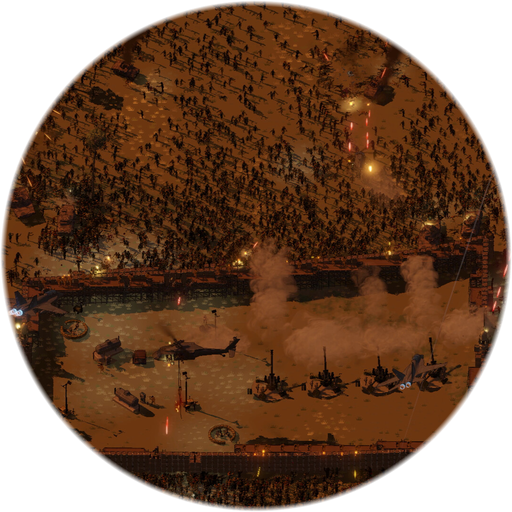
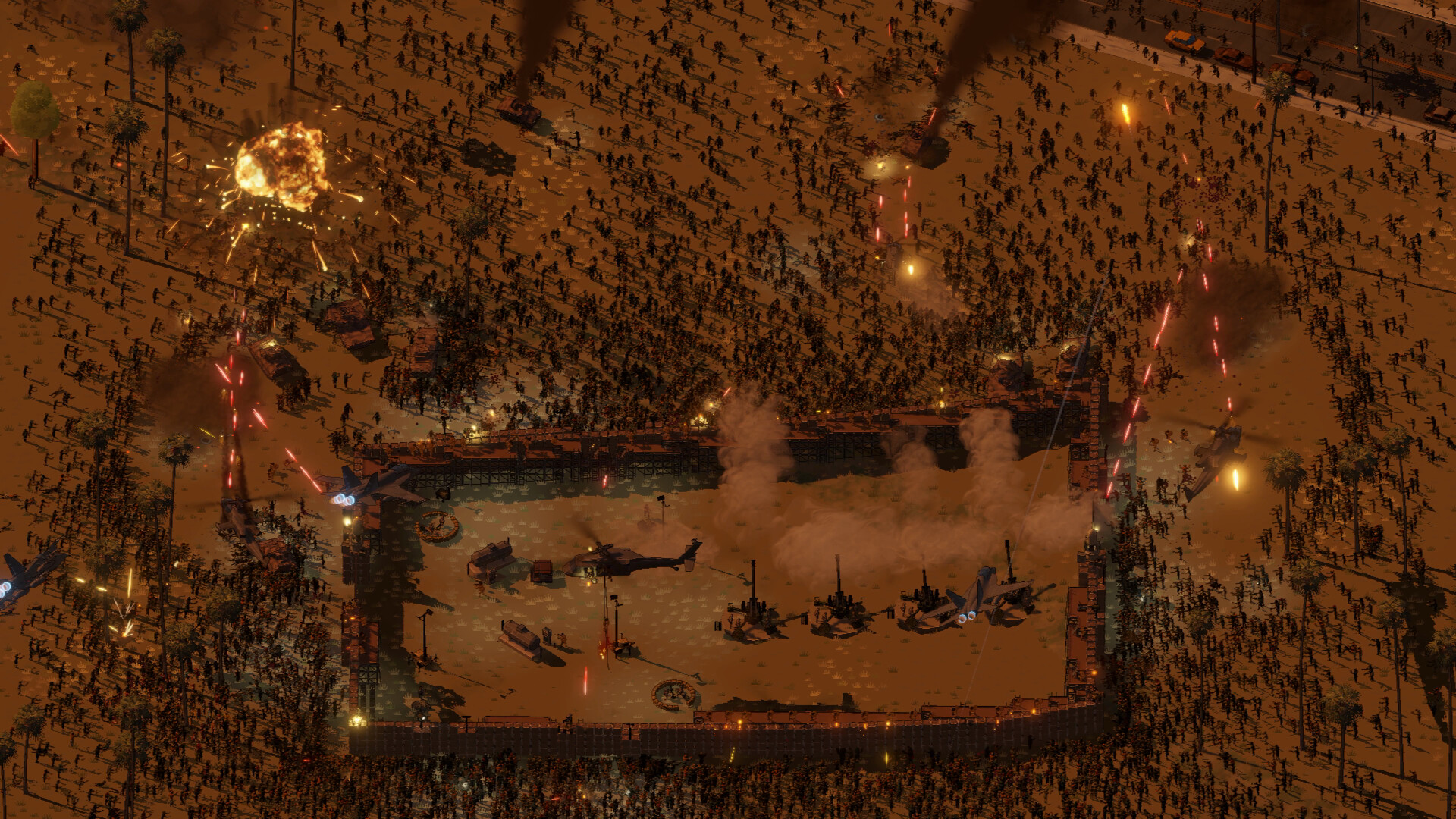
Strategy enthusiasts and survival gaming fans have been buzzing about the ebbtide indie game, an upcoming title that promises to redefine large-scale tactical warfare against the undead. As players dive deeper into what makes the ebbtide indie game a unique proposition in the crowded survival genre, anticipation continues to soar across digital storefronts like Steam’s official Ebbtide page.
The Core Premise: Command Humanity’s Last Task Force
The narrative backbone of the project places you in command of TF-1 “Ark,” humanity’s ultimate carrier task force. The apocalypse kicks off in Los Angeles, stretching from the iconic Hollywood Hills down to the Port of LA. Rather than managing isolated skirmishes, you direct overarching city operations before carrying the campaign onto a global scale.
According to community reports and early developer deep dives, the scale of the conflict is breathtaking. Players must manage military assets while desperate citizens try to survive the outbreak.
| Feature Category | Description | Tactical Impact |
|---|---|---|
| Faction Role | Commander of Task Force 1 “Ark” | Global reach starting from regional urban defense |
| Starting Theater | Los Angeles, California | 15 distinct districts shifting status |
| Primary Antagonist | Evolving, physics-driven zombie hordes | Requires constant supply chain preservation |
A Seamless Operations Map That Changes Everything
One of the most praised mechanics discussed in developer updates is the elimination of traditional loading screens between high-level strategy and micro-combat. When you scroll into any street on the operations map, it instantly transforms into a live battlefield. Scroll back out, and the war continues to rage without interruption.
Community feedback highlights how this removes artificial separation. There are no hidden auto-resolve buttons or separate mission brackets. Every single soldier lost, every building destroyed, and every zombie eliminated has immediate, lasting consequences on your campaign map.
| Map Interaction | Traditional RTS Approach | The Ebbtide Approach |
|---|---|---|
| Zone Transitions | Loading screens or separate tactical screens | Seamless zooming from global to street-level |
| Combat Resolution | RNG calculations or simulated auto-resolve | Real-time physics simulation on the live map |
| Consequence Tracking | Reset per mission or campaign stage | Permanent impact on resource pools and manpower |
Managing a City Under Siege
Los Angeles is partitioned into 15 distinct districts, each fluctuating between three critical statuses: Hold, Crisis, and Lost. Because you simply cannot save everyone, difficult command choices dictate your survival.
Player experience indicates that resource triage is essential. You will find yourself weighing the cost of holding a barricade versus pulling back valuable units.
- Local Forces: Order National Guard, LAPD, and LA County Sheriff units to hold lines, delay advances, or execute orderly withdrawals.
- Reinforcements: Call in elite U.S. Marines dispatched directly from Camp Pendleton.
- Logistics: Dispatch truck and helicopter convoys to evacuate trapped refugees or deliver emergency ammunition.
Facing a Horde That Fights Back
Combat in this project isn’t just about trading bullets with standard walking corpses. The undead swarm displays horrifying verticality. Hordes physically pile on top of one another to scale walls, claw at rooftops, and even cling to low-hovering helicopters.
Furthermore, player experience warns that fallen soldiers do not stay dead. Any infantryman killed by the horde immediately rises to swell the enemy ranks, turning early victories into compounding tactical nightmares.
| Threat Type | Behavior | Countermeasure |
|---|---|---|
| Vertical Swarming | Piles up to scale multi-story buildings and walls | Elevated scaffolding, perimeter wire, and clear lines of fire |
| Air Interference | Cling to low-flying transport or gunship assets | Maintain altitude discipline; provide heavy escort |
| Infection Spread | Killed friendly units reanimate as hostile entities | Immediate cremation or artillery purging of breached sectors |
Heavy Firepower and Resource Management
When local containment fails, commanders can unlock devastating military hardware. The available arsenal ranges from conventional artillery to advanced naval strikes.
- Artillery & Rockets: M777 howitzers and mobile HIMARS rocket batteries.
- Naval Support: Destroyer guns and precision Tomahawk cruise missiles.
- Air Superiority: Carrier-based F/A-18s, F-15Es, F-35Bs, A-10 Warthog runs, and persistent AC-130J gunship orbits.
However, ammunition is finite, and heavy ordnance carries collateral damage that can collapse essential buildings. Maintaining forward operating bases (FOBs) with HESCO barriers, concrete walls, gun nests, and CIWS units is vital for keeping your troops rearmed and refueled.
From Los Angeles to Global Campaign
Surviving the fall of Los Angeles is only the prologue. The survivors, equipment, and resources you manage to ferry aboard the Ark form the core expeditionary force for the world campaign.
As you sail from port to port, you will rescue stranded specialists who cannot be trained normally, forge alliances with other remaining naval forces, and track down the mysterious Nexus command nodes responsible for the global collapse.
Frequently Asked Questions
What kind of game is the ebbtide indie game?
It is an ambitious real-time zombie survival strategy game that blends macro-level operations with direct tactical control, base building, and complex supply chain management.
Is there multiplayer support planned?
Current information focuses primarily on the single-player campaign experience, where players command Task Force 1 “Ark” across Los Angeles and beyond.
Do I need a powerful PC to run it?
System requirements are still being finalized by the developer, ProjectAlive, though the game requires a 64-bit processor, Windows 10, and approximately 10 GB of available storage space.